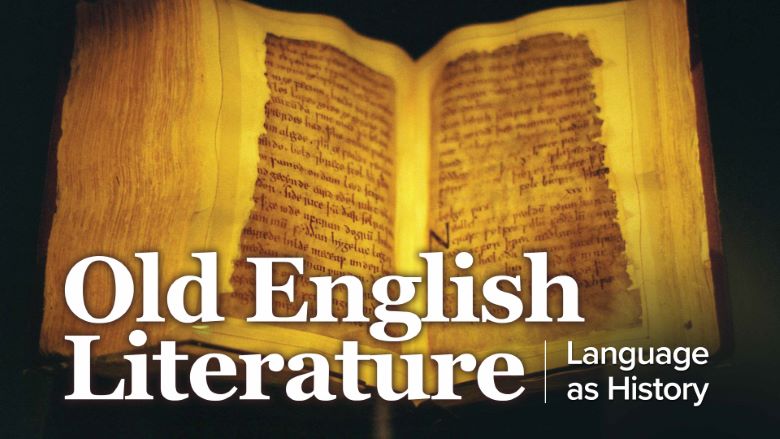
In the 24 lessons of Old English Literature: Language as History, you will experience the premodern world through the powerful tool of the written word.
With the guidance of author and medieval scholar Professor Renée Trilling, you will look back on the early medieval history of the British Isles and discover what Old English can reveal about the peoples, traditions, beliefs, and cultures of the past
Open a Door to the Past
While English is one of the oldest written vernaculars in Europe, it has changed considerably from its earliest days to its current form(s). So, to better understand the myriad ways medieval writers used the language, you will begin your journey into Old English with a look at the geographical and cultural origins of the language, as well as its actual structure and usage. As you will see, the Germanic origins of English were the result of migrations that occurred between 300–600 CE and the intermingling and exchange of cultures—Celtic, Roman, Norse, and more—in Britain. While we most often think of epic poems and heroic tales when we think of Old English, the language was also used in numerous other forms, including:
- Law codes and proclamations,
- Scientific writings,
- Medical tracts,
- Religious sermons, and
- Historical records.