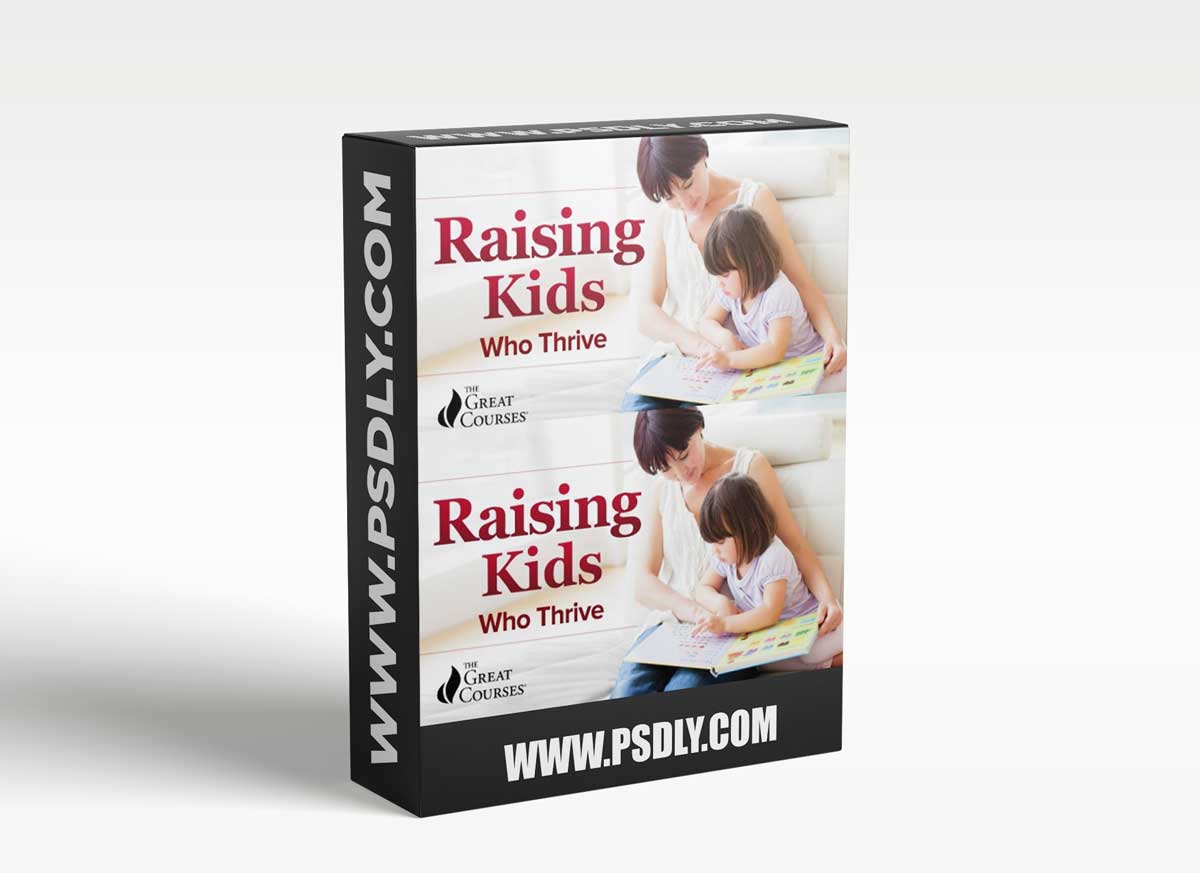
Learn scientifically proven techniques for raising healthy, happy, and intelligent children in this course taught by a world-renowned child development expert.
Dr. Peter M. Vishton is Associate Professor of Psychology at The College of William & Mary. He earned his Ph.D. in Psychology and Cognitive Science from Cornell University. Before joining the faculty of William & Mary, he taught at Northwestern University and served as the program director for developmental and learning sciences at the National Science Foundation. A consulting editor for the journal Child Development, Professor Vishton has published articles in many of the top journals in the field of psychology. Among these are Psychological Science, Science, and the Journal of Experimental Psychology. He is also the creator of the DVD What Babies Can Do: An Activity-Based Guide to Infant Development. In addition to teaching, Professor Vishton devotes much of his career to researching the perception and action control of both infants and adults. His studies-funded by prestigious institutions, including the National Institute of Child Health and Development and the National Science Foundation-focus on cognitive, perceptual, and motor development; visually guided action; visual perception; computational vision and motor control; and human-computer interface. Professor Vishton has presented his findings at numerous conferences and invited talks throughout the United States and Europe.
01: Self-Control-From Tummy Time to Tae Kwon Do
Start by considering physical activities that can contribute to mental development; for instance, the value of getting kids involved in activities that promote self-awareness and self-control such as tae kwon do or yoga. Learn principles of science that should be kept in mind when sifting through the flood of available advice and information about parenting.
02: Seeing, Hearing, Thinking, Learning Infants
Can infants do math? Is there a window of early brain development that-if missed-can doom a child to a life of mediocrity? Explore the wealth of evidence suggesting that even very young infants are seeing, hearing, thinking, feeling beings, and gain tips for creating enriching experiences for your baby….
03: Sleep-Getting Enough “Vitamin S”
Here, get tips for making sure your baby-and you-get all the sleep you need. Learn simple ways to comfort a newborn, methods for training your baby to self-soothe, and measures to prevent sudden infant death syndrome (SIDS). Discover sleep’s relationship to cognitive development and the importance of a consistent bedtime.